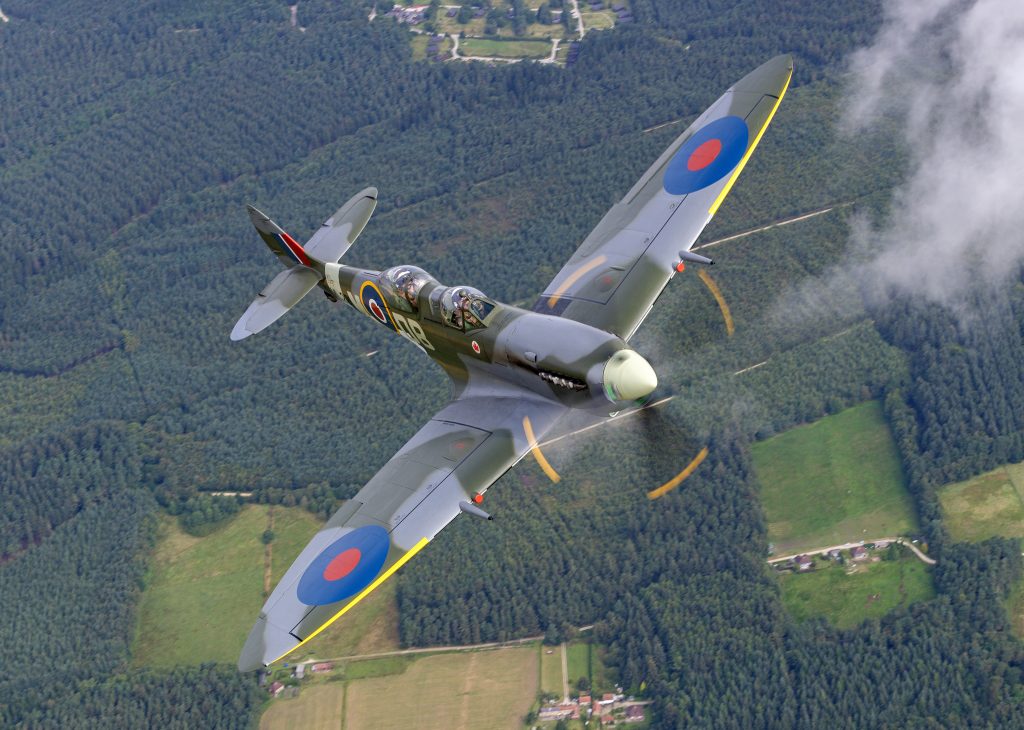
ML295

The World War II history of Goodwood (RAF Westhampnett)

Exploring the role of Goodwood in the Second World War

Goodwood Aerodrome in West Sussex is the beloved home of Spitfires.com.

But before it became the civilian airport it is today, the site began life as RAF Westhampnett, a satellite fighter airfield serving nearby RAF Tangmere.

RAF Westhampnett operated from 1940-1946. So while it missed the early years of the Second World War, its location close to the south coast made it critical to operations over the English Channel and northern France.

The WWII history of RAF Westhampnett has long since passed. But every year, hundreds of visitors rekindle those tales of immense bravery, tactical genius and astonishing skill with unforgettable Spitfire flight experiences at Goodwood Aerodrome.

Book your Spitfire flight online today to write your own entry in the history of RAF Westhampnett.

How RAF Westhampnett was established as a WWII airbase

The rapid expansion of the Luftwaffe during the 1930s forced Britain to increase the size of the RAF and provide more bases for its growing fighter force.

Permanent bases like RAF Tangmere contained conspicuous brick buildings and concentrated large numbers of aircraft in locations already known to German reconnaissance planners. So Fighter Command developed satellite airfields near major stations to help squadrons disperse their aircraft and reduce the damage that a single bombing raid could cause. These sites also offered emergency landing grounds for damaged aircraft or pilots unable to return to their assigned station.

In 1938, the Air Ministry approached Frederick Gordon-Lennos, the 9th Duke of Richmond and Gordon, to discuss establishing an emergency landing and dispersal ground on the Goodwood Estate.

The Duke agreed to make Westhampnett Farm available. And so hedges were removed and fields were combined to create a large grass landing area. The wartime landing ground eventually contained 3 grass airfield directions, with the longest extending to approximately 1,300 metres.

Early facilities were basic. Tents were used in place of full buildings. And engineers often performed aircraft maintenance out in the open.

The station later acquired blister hangars, a Type T1 hangar, technical buildings and accommodation for more than 1,400 personnel.

RAF Westhampnett became an operations satellite of RAF Tangmere within No. 11 Group, Fighter Command. This group was responsible for defending London and southeast England against attacks from across the Channel.

The role of RAF Westhampnett during the Battle of Britain

RAF Westhampnett became operational during the opening weeks of the Battle of Britain, which is recognised to have run from 10 July to 31 October 1940.

No. 145 Squadron arrived at RAF Westhampnett on 31 July 1940. They were commanded by Squadron Leader John Peel, who had already led them during the opening stages of the Battle of Britain.

The Squadron operated Hawker Hurricanes from the grass airfield. And they entered a particularly intense period of operations as the Luftwaffe attacked Channel shipping, south-coast ports and RAF fighter stations.

Westhampnett’s fighters helped defend the stretch of coastline extending from Brighton to the western side of the Isle of Wight. Their aerial opponents included Junkers Ju 89 dive bombers, Messerschmitt Bf 109 fighters and Messerschmitt Bf 110 heavy fighters.

No. 145 Squadron suffered heavy casualties. Of the 25 pilots who flew with the unit, 11 were killed.

No. 602 (City of Glasgow) Squadron replaced No. 145 on 13 August 1940, arriving just as the Luftwaffe began concentrating more heavily on Fighter Command’s airfields and infrastructure. This group operated the iconic Supermarine Spitfire fighter aircraft. And in total, 6 of their pilots were killed during the Squadron’s time at RAF Westhampnett.

RAF Tangmere was attacked and badly damaged more than once during the Battle of Britain. But RAF Westhampnett escaped direct bombing. So by dispersing fighters and personnel away from permanent stations towards satellite airbases, Fighter Command was successful in limiting its losses and casualties.

Fly a Spitfire over the English Channel

Soar through the same skies as history’s most legendary fighter pilots in a genuine WWII Spitfire aircraft.



RAF Westhampnett’s contributions to other major wartime operations

The Channel Dash

During the night of 11-12 February 1942, the German warships Scharnhorst, Gneisenau and Prinz Eugen left Brest under Operation Cerberus. Their goal was to move through the English Channel and Dove Strait to reach safer bases in Germany rather than leave themselves exposed to British air attacks in Western France.

Poor weather, radar failures, communication problems and missed reconnaissance opportunities allowed the German ships to travel for hours without being positively identified. In fact, a confirmed sighting wasn’t reported until around 11:10 on 12 February. By this time, they’d advanced far into the English Channel under strong Luftwaffe protection.

In response, Britain launched Operation Fuller, a combined initiative involving the Royal Navy, RAF Bomber Command, Fighter Command and Coastal Command.

Spitfire squadrons from the Tangmere area were among the fighter forces ordered to provide cover for British attacks and engage the German fighter escort. This included No. 41 Squadron, who were based at RAF Westhampnett and operated Spitfire Mk Vbs.

Unfortunately, rushed coordination prevented the British forces from delivering a single concentrated attack. So all 3 enemy ships eventually reached German-controlled waters.

But the operation did expose a serious weakness in Britain’s ability to coordinate naval and air forces against a rapidly moving target. This valuable information that went on to inform the strategy for joint operations later in the war.

The Dieppe Raid

Operation Jubilee, the Allied raid on the French port of Dieppe, took place on 19 August 1942. The landings involved more than 6,000 troops, most of them Canadian, supported by the Royal Navy and RAF.

One objective of the Dieppe Raid was to test German coastal defences and gain experience for a future invasion. But the assault ended with heavy Allied losses, and they failed to achieve most of their goals.

The recently arrived United States Army Air Forces 31st Fighter Group operated Spitfires from the surrounding Tangmere airfields during the raid, including RAF Westhampnett. This was the Group’s first official combat mission of the Second World War.

Aerial combat over Dieppe was one of the largest single-day air battles to have taken place in Western Europe at that point.

The 31st Fighter Group claimed two German aircraft destroyed, 3 probably destroyed and one damaged during the operation. But they lost 8 aircraft in doing so, making the Dieppe Raid a dark chapter in the history of the Spitfire.

The role of RAF Westhampnett in D-Day

RAF Westhampnett became part of the Second Tactical Air Force system assembled to support the Allied invasion of occupied Europe.

In April 1944, No. 144 Airfield Headquarters, Royal Canadian Air Force (RCAF), arrived at RAF Westhampnett. They comprised No. 441 (Silver Fox) Squadron RCAF, No. 422 (Caribou) Squadron RCAF and No. 443 (Hornet) Squadron RCAF, all of whom operated Spitfire Mk IXs.

During April and May, the Canadian units trained intensively for the invasion while flying escorts, fighter sweeps and attacks against German targets in northern France.

Their pre-invasion missions formed part of the Allied effort to weaken German radar, transport and defensive systems before troops crossed the Channel. And from 13 April – 5 June 1944, No. 443 Squadron alone recorded more than 487 sorties.

On 6 June 1944, fighters from RAF Westhampnett helped protect the D-Day invasion force, covering Allied shipping and restricting the Luftwaffe’s ability to attack the landing beaches. The Squadrons also provided fighter-bomber support over Normandy, attacking road traffic, railways, defensive positions and other targets behind the German front.

The Canadian wing began transferring to airfields in Normandy as the Allies secured usable landing grounds, bringing its period at RAF Westhampnett to an end.

Westhampnett continued supporting units involved in the Battle of Normandy. And later, it hosted other RAF squadrons as air operations moved deeper into France, Belgium and the Netherlands.

What happened to RAF Westhamnett after the Second World War?

RAF Westhampnett remained in military use for a short period after Germany’s surrender in May 1945.

The station’s operational importance declined as wartime fighter units disbanded or transferred to permanent bases. And the RAD formally ended their use of the site in 1946, just 6 years after the airfield had entered frontline service.

Use of the land returned to the Goodwood Estate. But its grass runways continued to support civil flying. And it eventually became known as Goodwood Aerodrome.

Squadron Leader Tony Gaze, an Australian fighter pilot and racing driver who had flown from RAF Westhampnett, suggested that the former airfield’s perimeter road could be turned into a motor-racing circuit.

The Duke Frederick Gordon-Lennos, himself a renowned amateur racer, supported the proposal. And he developed the perimeter road into Goodwood Motor Circuit.

The circuit opened on 18 September 1948 to host Britain’s first professionally organised post-war race meeting at a permanent venue.

Approximately 85 drivers and more than 15,000 spectators attended that inaugural meeting. And the circuit became a major centre of British motor racing before contemporary competition ended there in August 1966.

Aviation continued within the circuit, today serving as Goodwood Airport. Between the central grass airfield, perimeter track and surviving military buildings, Goodwood still preserves the wartime history of RAF Westhampnett.

Immerse yourself in the history of RAF Westhampnett with a Spitfire flight experience

The history of Goodwood Aerodrome, formerly RAF Westhampnett, is a truly fascinating tale of wartime strategy and heroism that spans countries, cultures and time.

But the one thing more captivating than reading about those stories is reliving them first-hand with your very own two-seater Spitfire passenger flight experience.

The genuine wartime aircraft we operate from Goodwood Aerodrome still use the same authentic grass runways from more than 80 years ago. And you’ll have the chance to take control of a real warbird in the same English Channel skies that determined the course of world history.

Book your Spitfire flight online today and get excited for a one-in-a-lifetime experience that writes your name in British aviation history.


Comments

Spitfire Flight Experience Dates 2027

Goodwood (HQ)

  • 21st Apr - 11th Jul (Wed-Sun)
  • 21st Aug - 29th Aug (Wed-Sun)
  • 6th Oct - 17th Oct (Wed-Sun)
  • We also fly on Bank Holiday Mondays

Belfast

  • 9th Apr - 11th Apr

Bournemouth

  • 24th Apr - 25th Apr
  • 19th Jun - 20th Jun
  • 21st Aug - 22nd Aug
  • 16th Oct - 17th Oct

Dunkeswell

  • 26th Apr - 27th Apr
  • 24th May - 25th May
  • 21st Jun - 22nd Jun
  • 19th Jul - 20th Jul
  • 23rd Aug - 24th Aug
  • 20th Sep - 21st Sep
  • 18th Oct - 19th Oct

Guernsey

  • 11th Jun - 13th Jun

Hawarden

  • 19th May - 21st May
  • 30th Jul - 1st Aug

Jersey

  • 29th May - 31st May

Leeds East

  • 16th Apr - 18th Apr
  • 14th May - 16th May
  • 4th Jun - 6th Jun
  • 2nd Jul - 4th Jul
  • 23rd Jul - 25th Jul
  • 13th Aug - 15th Aug
  • 27th Aug - 29th Aug
  • 10th Sep - 12th Sep
  • 24th Sep - 26th Sep
  • 22nd Oct - 24th Oct

Perth

  • 24th Jun - 27th Jun
  • 5th Aug - 8th Aug

Teesside

  • 7th May - 9th May
  • 9th Jul - 11th Jul

Simulator

  • Tuesday to Friday
  • February to December

FLY ALONGSIDE

  • 24th Apr
  • 8th May
  • 22nd May
  • 12th Jun
  • 26th Jun
  • 10th Jul
  • 24th Jul
  • 7th Aug
  • 21st Aug
  • 9th Oct